Plant-based topical haemostatic

Haemostasis, from five plants.

Ankaferd Blood Stopper® forms a protein network within a second of touching blood⁠1, from a standardised mixture of five plant extracts⁠2.

  • 5plant extracts, standardised
  • <1 sprotein-network formation⁠1
  • CE-marked medical deviceEU Class III device for external bleeding; also approved in Türkiye. Details
Illustration: a drop of blood with a fine protein network forming across its surface, framed by a measuring ring

Contactnetwork forms in under a second

Protein networknotably fibrinogen γ

Red-cell aggregationvia membrane proteins

Fig. 1Illustrative rendering of the proposed mechanism, not to scale.

Proposed mechanism

How it works, in three moments.

What published research describes, step by step. The mechanism is proposed and still being studied⁠3.

Proposed mechanism, illustrated in three moments Moment one: drops of Ankaferd reach red blood cells escaping from a small wound. Moment two: a fine protein network forms between the cells and draws them together. Moment three: the network and aggregated cells form a mesh over the bleeding point, while coagulation-factor values were reported to stay normal.

01 Contact

The solution meets blood.

Ankaferd is applied topically, straight onto the bleeding surface.

t = 0

02 Network

A protein network forms.

Researchers report a protein network forming within a second of contact⁠1. It is built notably around fibrinogen gamma and is tied to the aggregation of red blood cells through their membrane proteins: spectrin, ankyrin and actin⁠3.

t < 1 s, reported

03 Independent

The clotting cascade is reported left alone.

The effect is reported not to rely on individual coagulation factors; in studies, these values stayed normal during administration⁠1⁠3. This is one reason it has been studied for dental bleeding in people with haemophilia and von Willebrand disease⁠3.

  • V
  • VII
  • VIII
  • IX
  • X
  • XI
  • XIII
  • PT
  • aPTT

Composition

Five plants, one standardised extract.

Ankaferd Blood Stopper® is entirely herbal: a standardised mixture of extracts from five plants⁠2.

  1. Thymus vulgaris

    Thyme

  2. Glycyrrhiza glabra

    Liquorice

  3. Vitis vinifera

    Grape vine

  4. Alpinia officinarum

    Lesser galangal

  5. Urtica dioica

    Stinging nettle

Plates drawn for this site.

The story behind the plants

Origin & status

Approved by the Turkish Ministry of Health for local applications in dental and superficial bleeding.⁠1

Tibi et al., Ann Med Surg, 2025/26: peer-reviewed narrative review
Ankara · 39.9° N 32.9° E About Ankaferd
  • CE-marked in the EUA Class III medical device (Directive 93/42/EEC, notified body TSE) for the topical control of external bleeding, distributed in Germany.
  • Described as a firstThe first Turkish medical product officially recognised by the Turkish Ministry of Health⁠4.
  • Hacettepe University, AnkaraIts introduction was supported by research at the university; the product itself was not developed there⁠4.
  • Hospitals and ambulancesUsed in Turkish hospitals and ambulances for external bleeding⁠4. Primary source to follow.

Clinical applications

Where it has been studied.

Published reports reach from the dental chair to the endoscopy suite. Most are small studies and case series, and we label them that way.

  1. Dental

    Post-extraction bleeding, including patients on anticoagulants and with haemophilia or von Willebrand disease; periodontal surgery; pulpotomy.

    Small studiesCase series

  2. ENT

    Adenoidectomy, tonsillectomy and anterior epistaxis.

    Small studies

  3. GI endoscopy

    Peptic ulcer, variceal and non-variceal bleeding, rectal ulcer and GI tumour bleeding.

    Case series

  4. Surgery

    Thyroidectomy, CABG, percutaneous nephrolithotomy, prostatectomy, episiotomy and cutaneous incisions.

    Small studies

  5. Pulmonology

    Endobronchial instillation for haemoptysis⁠2.

    Retrospective · n = 20

  6. Wound & first aid

    External bleeding: used in Turkish hospitals and ambulances⁠4. Primary source to follow.

    Reported use

Study-design tags summarise the review literature⁠1⁠3. Each area page lists the individual studies.

Evidence, honestly

What the evidence says, and what it doesn’t yet.

Most of what is known comes from laboratory, animal and small clinical studies. Reviewers call for larger controlled trials⁠1. We would rather show you that than hide it.

Where the evidence for Ankaferd sitsAn evidence pyramid. The base tiers, laboratory studies, animal studies and small clinical studies or case series, hold most of the published evidence. The top tier, larger controlled trials, is outlined with a dashed line because such trials are still called for. Controlled trials Called for Small clinical studies & case series Animal studies In vitro & laboratory
Where most published evidence sitsStill neededSummary of review literature⁠1⁠3

What is reported

  • Fast network formation. A protein network forms within a second of contact with blood⁠1.
  • Cascade-independent. Coagulation factors, PT and aPTT stayed normal during administration⁠3.
  • Reported clinical use. Reports span dental, ENT, endoscopic and surgical bleeding⁠1.
  • Contaminant screening negative. Tested negative for heavy metals, pesticides, aflatoxins, GMO material and dioxins⁠3.

What is still open

  • Controlled trials. Larger, controlled studies are needed to confirm clinical benefit⁠1.
  • Neural tissue. Biocompatible in most studies, but potential neurotoxicity was seen in rodents and is debated. Avoid direct application on exposed neural tissue⁠1.
  • Beyond bleeding. Wound-healing, antimicrobial and antineoplastic effects must be regarded as investigational⁠1.

Ann Med Surg · 2025/26 · Narrative review

Beyond hemostasis: the multifaceted therapeutic potential of Ankaferd Blood Stopper

Tibi SE, et al.

SAGE Open Med · 2017 · Laboratory

Proteomic and transcriptomic analyses to explain the pleiotropic effects of Ankaferd blood stopper

Simsek C, Selek S, Koca M, Haznedaroglu IC.

Evidence-level bars are an editorial guide to study design, not a quality score.

Open the evidence library

The products

Two products, one solution.

We distribute two forms of Ankaferd Blood Stopper® in Germany: one for first aid, one for the operating room. Both carry the same five-plant solution, applied topically, and both are sterile according to the manufacturer.
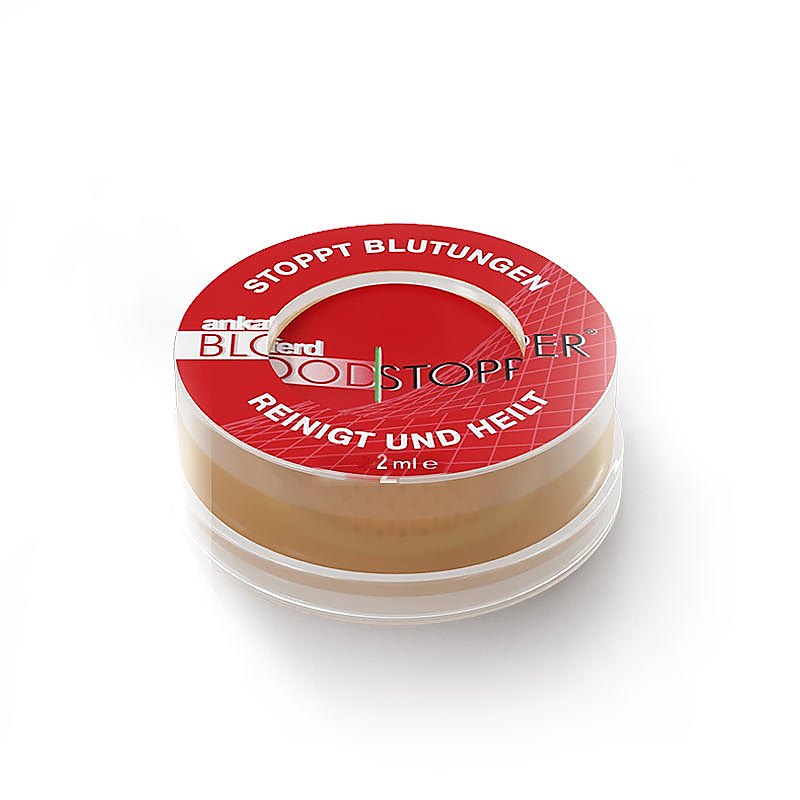
Push & Stop applicator, closed, with its press lid
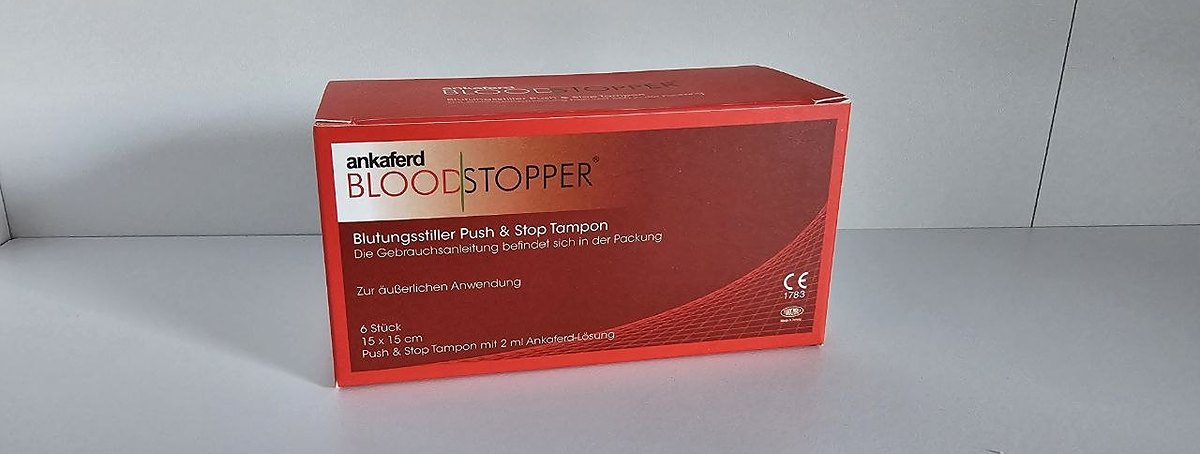
Push & Stop retail pack (box of 6 × 2 ml, 15 × 15 cm)
The German retail pack: box of 6, 18 × 22 cm.

01First aid · on the go

Push & Stop

German name: Push & Stop

Press the lid and the dry cloth soaks up the plant-based solution, ready to press onto a bleeding wound. Made for first-aid kits, the car and the pharmacy shelf.
Intended use
First aid, cars, pharmacies (per the manufacturer)
Size
15 × 15 cm · 2 ml
Pack
6 sterile
PZN (Germany)
18276168 (6 × 2 ml)
Where to buy
Online shop doc3.de, and pharmacies in Germany

How Push & Stop is used

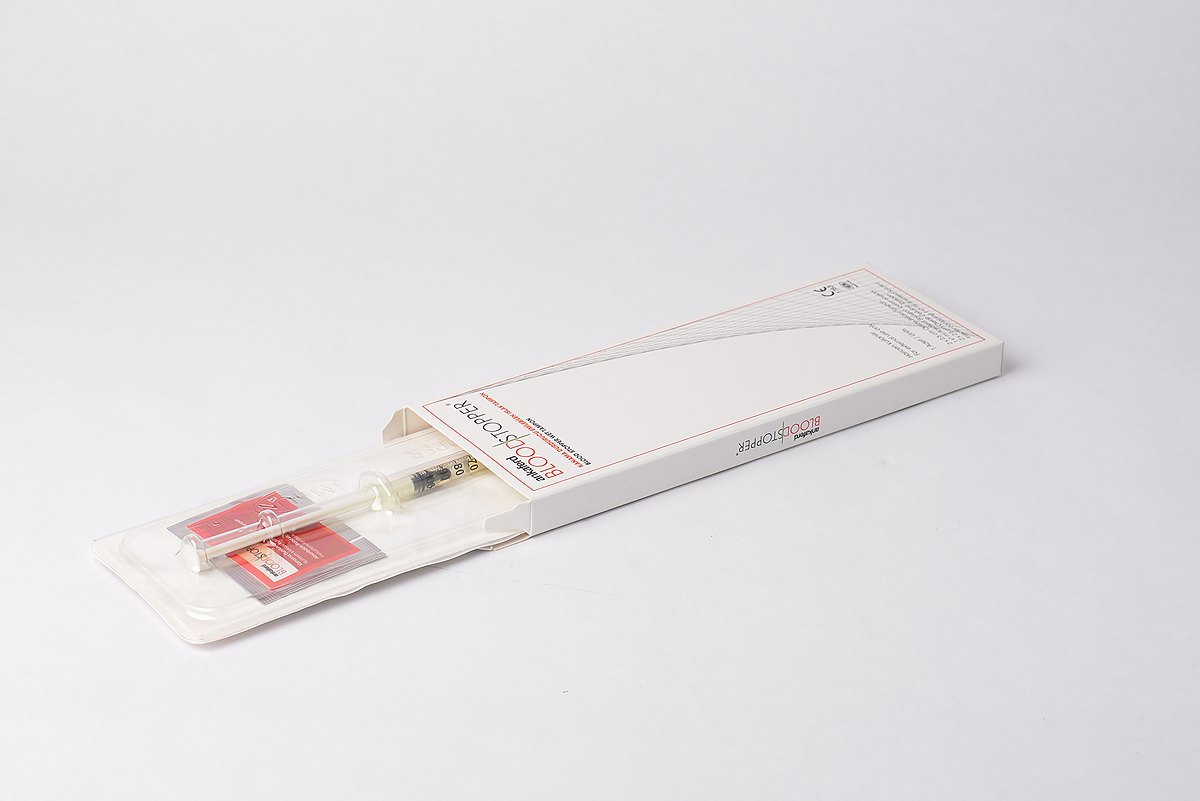
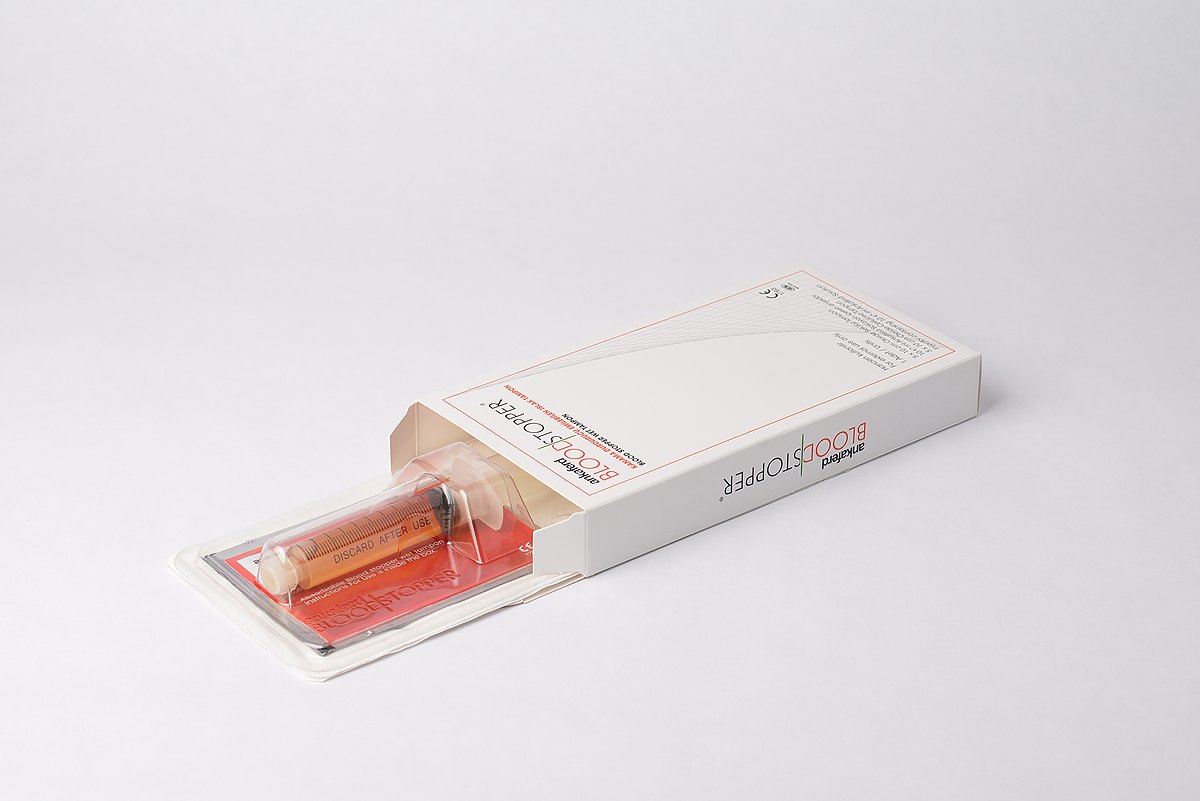
Absorbable wound dressing in its sterile sleeve with the pre-filled applicator
Absorbable wound dressing: sterile blister with the single-use pre-filled applicator
Sterile blister with the single-use, pre-filled applicator.

02Surgical · clinical

Absorbable wound dressing

German name: Absorbierbare Wundauflage

An oxidised regenerated cellulose (ORC) pad carrying the ABS solution, delivered with a pre-filled, single-use applicator. It is placed by a clinician in surgical, endoscopic or laparoscopic settings.

Intended use
Surgical, endoscopic, laparoscopic; placed by a clinician (per the manufacturer)
Sizes
Dental: 0.5 ml (1 × 2.5 cm), 1 ml (2 × 2.5 cm). Other: 2.5 ml (2.5 × 5 cm), 5 ml (5 × 5 cm), 10 ml (5 × 10 cm)
Pack
1 sterile set
PZN (Germany)
17901658 (0.5 ml)  |  17901687 (1.0 ml)
Absorption
Per the manufacturer, absorption begins in 7–14 days and is roughly complete by about 40 days
Caution
Not to be placed into a vein (per the manufacturer)
Where to buy
For hospitals and clinics: contact the team

The manufacturer, İmmün Gıda İlaç Kozmetik, also produces other forms; the two above are what we distribute.

For healthcare professionals

Questions about using it in your practice?

Ask about application, evidence, availability or the Instructions for Use. Enquiries from clinicians, pharmacists and procurement teams are welcome.

Response time: within 2 working daysLanguages: EN · TR · DE (confirm)

References on this page (4)
  1. [1]Tibi SE, et al. Beyond hemostasis: a narrative review on the multifaceted therapeutic potential of Ankaferd Blood Stopper. Ann Med Surg. 2025/26;88(1):522–533. doi:10.1097/MS9.0000000000004388
  2. [2]Simsek C, Selek S, Koca M, Haznedaroglu IC. Proteomic and transcriptomic analyses to explain the pleiotropic effects of Ankaferd blood stopper. SAGE Open Med. 2017;5:2050312117722569. doi:10.1177/2050312117722569
  3. [3]Çiftçiler R, Haznedaroğlu İC. Ankaferd hemostat: from molecules to medicine. Turk J Med Sci. 2020;50(7):1739–1750. doi:10.3906/sag-1908-161
  4. [4]Wikipedia contributors. “Ankaferd Blood Stopper.” Wikipedia, The Free Encyclopedia. Encyclopaedic secondary source, used here for history and status only.